
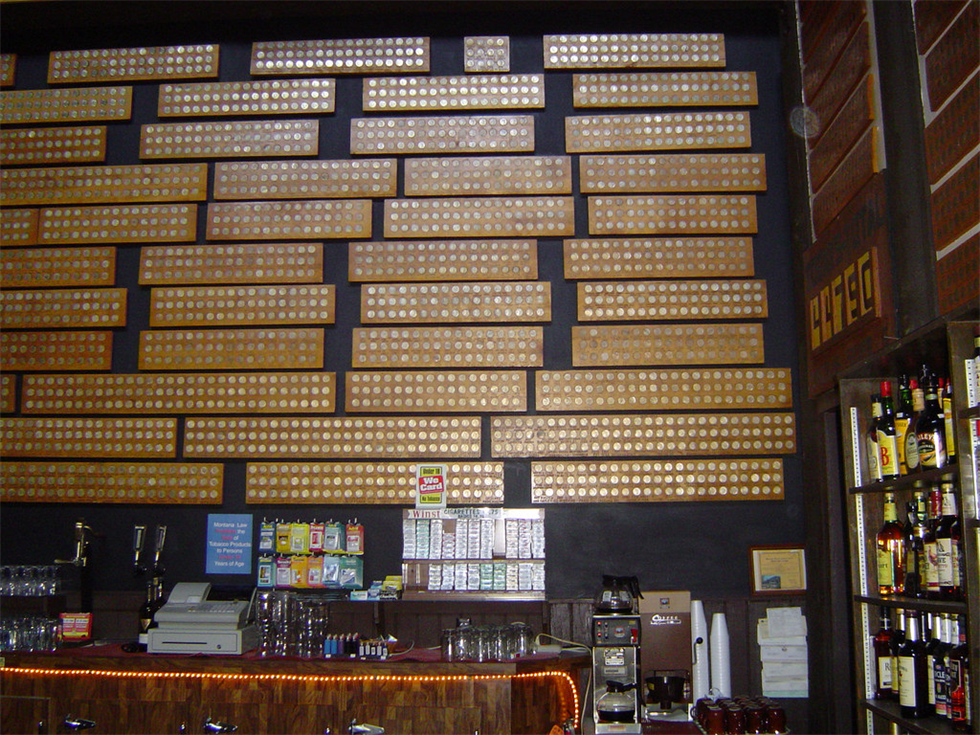
Depart from Seattle in the morning and head east along Highway 90. Travel through the semi-desert plateau to Spokane. Spokane is the second largest tourism center in Washington state in the United States. It hosted the World Expo in 1974 and was the smallest city to host the World Expo in history. This is also the first World Expo with an environmental theme in history, and World Environment Day begins in Spokane. Then proceed to Missoula, Montana. Arrive at a special gift shop - "Fifty Thousand Silver Dollar Store". Overnight in Missoula.
Itinerary:
Seattle → Spokane (40 minutes) → Missoula → Fifty Thousand Dollar Store (30 minutes)
50,000 Silver Dollar Collection Bar 50,000 Silver Dollar Collection Bar
This small shop opened on Route 10 in 1951. Its original customers were mainly lumberjacks wearing work pants and carrying silver dollars in their pockets. The boss had a sudden idea and hung a silver dollar on the door with his name on the bottom. Unexpectedly, the workers followed suit. You hang a dollar, I nail a dollar, and they all leave their own. As a result, there were more and more names, from one to a hundred, then to a thousand to ten thousand. Passing tourists were also attracted by this unique approach. When they entered the store, they nailed a silver dollar to the wall and wrote their name to express their visit. As a result, the business of the small store became better and better, and the 50,000 Silver Dollar Store was born. In 1956, it was expanded to Highway 90. The total number of silver dollars in the store now reaches more than 60,000. It has also become one of the must-visit attractions for tourists on Route 90 today.
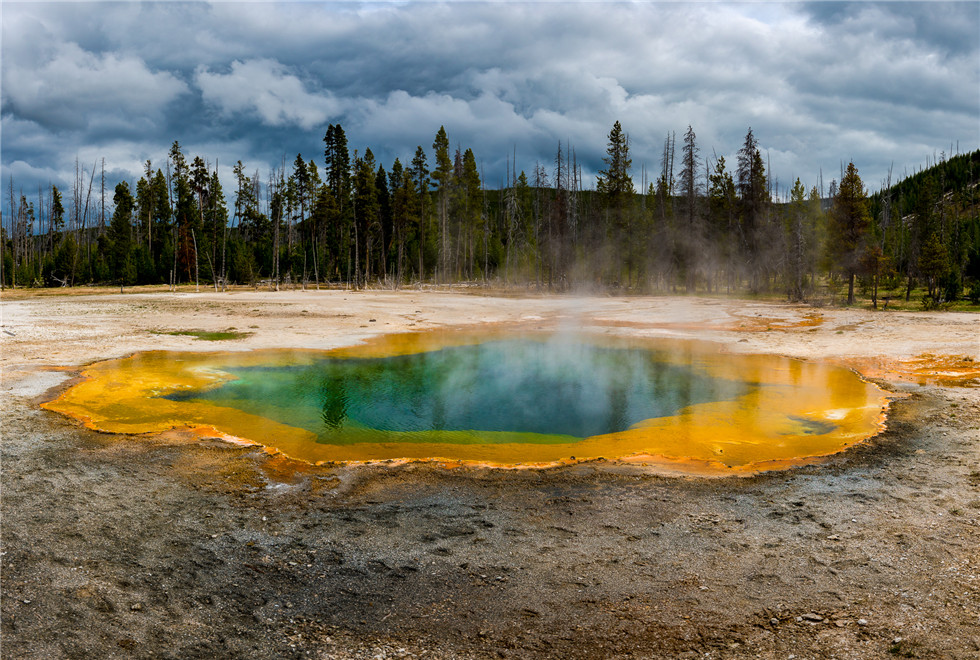
Yellowstone National Park was included in the World Natural Heritage List in 1978. It is the first and largest national park in the world, located primarily in Wyoming and with parts in Montana and Idaho. Yellowstone National Park is proudly called "the most unique magical paradise on earth" by Americans. Overnight at West Yellowstone hotel.
Itinerary:
Missoula → Yellowstone National Park (5 hours) → West Yellowstone
Special instructions:
1. Visit to Yellowstone Park: Old Faithful (the duration of the visit depends on the eruption time of the fountain), Grand Prismatic Hot Springs (60 minutes), Morning Glory, Mud Volcano (30 minutes), Norris Geyser Basin (60 minutes), Soy Milk Pool and other attractions. The specific tour time is subject to actual conditions.
Yellowstone National Park Yellowstone National Park
It is located in the Rocky Mountains, known as the "Backbone of America", on the lava plateau between the Northern Rockies and the Central Rockies in the western United States. The geothermal wonder is his symbol, a primitive landscape tempered by water and fire. The natural landscape in the park is divided into five major areas, namely Mammoth Area, Roosevelt Area, Canyon Area, Geyser Area and Lake Area. Each of the five scenic areas has its own characteristics. Beyond the limits of what human art can express, it is the most wonderful and spectacular beauty on the face of the earth.
Old Faithful Geyser Old Faithful Geyser
Old Faithful Geyser is named for its consistent and regular eruptions. Currently, it erupts approximately every 60 to 110 minutes. Each eruption lasts for four to five minutes. The water column reaches a height of more than 40 meters. It is spectacular and never stops. The Old Faithful Visitor Center will lay out the eruption timetable in advance, so you can check the eruption time first and then go sightseeing with confidence.
The Grand Prismatic Hot Spring in Yellowstone
Also known as the Colorful Pool, it is the largest hot spring in the United States and the third largest in the world, with a width of 75-91 meters and a depth of 49 meters. About 2,000 liters of hot water at 71 degrees gushes out every minute. The amazing thing about Grand Prismatic Hot Springs is that the color of the lake changes with the seasons. In spring, the lake changes from emerald green to golden orange due to microorganisms such as algae and pigment-containing bacteria living in the mineral-rich water. In mid-summer, the chlorophyll content is relatively low, so the lake appears a brilliant orange, red or yellow color. But in the cold winter months, due to lack of light, these microorganisms will produce more chlorophyll to suppress the color of carotenoids, so the water body will appear a deep dark green.
Mud Volcano Area Mud Volcano Area
It is located in the eastern part of Yellowstone Park, not far to the north of Yellowstone Lake. Most of the fountains here spout not water, but mud, and the ground shakes every time it erupts. Next to the mud volcano, colorful grass grows, which looks extremely soft and gorgeous.
Norris Geyser Basin Yellowstone Norris Geyser Basin
Norris Geyser Basin is the hottest and most erratic series of geysers in Yellowstone Park. It has been dormant for a long time and only erupts once in a long time (the last eruption was in 2008). It once set a record of eruption height of 380 feet. The geysers in this area are also quite rich in color, ranging from crystal clear blue-green to soft milk-like blue-white.
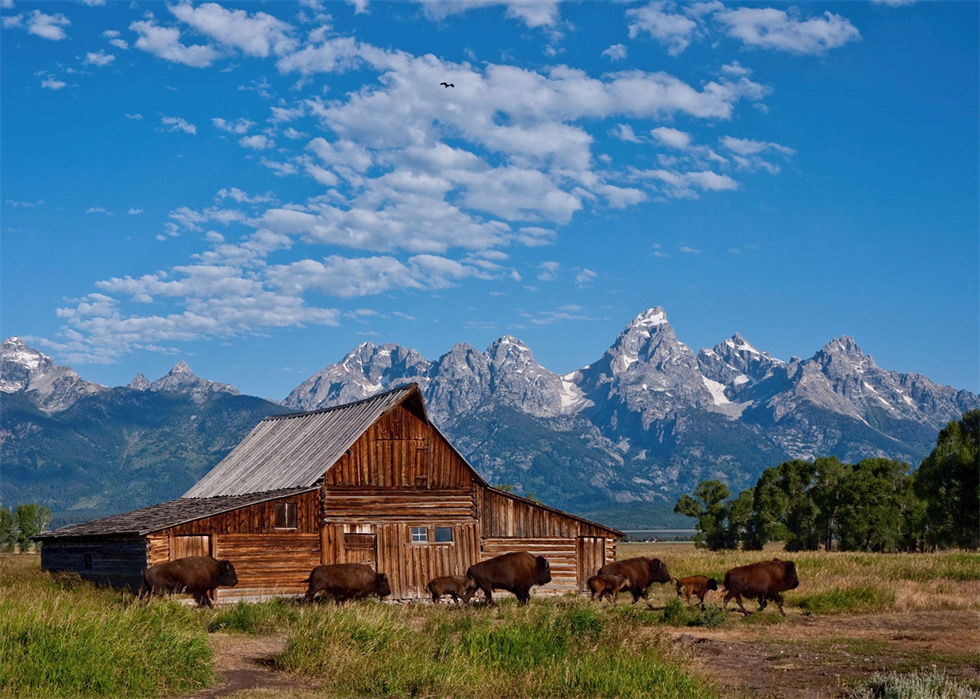
Today we will continue our tour of Yellowstone National Park. We will then arrive at Grand Teton National Park in northwest Wyoming, USA. Grand Teton Peak, with an altitude of 4199 meters, is the highest peak in the Teton Mountains and has glaciers that still exist today. Then go to the famous cowboy town of Jackson. There is a vast elk sanctuary near the town. The most eye-catching thing in the town is the Antler Park in the center, which is made of 7,500 real antlers. It is a spectacular sight. Finally return to your hotel in West Yellowstone.
Itinerary:
Yellowstone National Park (3 hours, stop at West Thumb Geyser Basin) → Grand Teton National Park (120 minutes) → Jackson Township → Antlers Park (30 minutes) → West Yellowstone
Yellowstone National Park Yellowstone National Park
It is located in the Rocky Mountains, known as the "Backbone of America", on the lava plateau between the Northern Rockies and the Central Rockies in the western United States. The geothermal wonder is his symbol, a primitive landscape tempered by water and fire. The natural landscape in the park is divided into five major areas, namely Mammoth Area, Roosevelt Area, Canyon Area, Geyser Area and Lake Area. Each of the five scenic areas has its own characteristics. Beyond the limits of what human art can express, it is the most wonderful and spectacular beauty on the face of the earth.
West Thumb Geyser Basin West Thumb Geyser Basin
The West Thumb Geyser Basin is located on the edge of Yellowstone Lake. It was formed due to the collapse of the earth's crust 150,000 years ago. The combination of hot fountains and lake water creates a wonderful smoky landscape: the smoky place is the steam of the hot springs, and the green waves are filled with Yellowstone lake water. It complements the blue sky and white clouds in the background, forming a landscape that is different from other hot spring areas in Yellowstone. This is equivalent to the bay of Yellowstone Lake. Many geysers gather here. The colors of the water spout are various, some are transparent green, and some are dark black like cement color. Many water spouts present a beautiful illusion.
Grand Teton National Park Grand Teton National Park
Grand Teton National Park was established on February 26, 1929. There are 300 kilometers of trails in Grand Teton National Park. There are many lakes in the park, including Jackson Lake and Jenny Lake. Most of Grand Teton National Park is located within the Rocky Mountains, and the natural landscape is spectacular. In addition, Grand Teton National Park also has extremely rich biological resources, including American bison, grizzly bears, black bears, moose, etc.
Elk Antler Arches Park
The park is not big, with giant arches made of antlers in the four directions of east, west, north and south. The antlers are all top quality, but these antlers are not obtained from hunting. Every winter, a large number of elk come from the mountains to the National Elk Refuge in Jackson to spend the winter. In the spring, the antlers naturally fall off and are renewed. After the elk leave, countless treasures are left everywhere.
Today we will return to Yellowstone once again to explore the wonders of nature and we will visit: Norris Geyser Basin. This is the hottest and most unstable series of geysers in Yellowstone Park. The geysers in this area are also quite rich in color, ranging from crystal clear blue-green to soft milk-like blue-white. Due to its instability, new geysers are produced every year. After visiting Yellowstone National Park, we will drive back to Missoula and check in.
Itinerary:
Yellowstone National Park (5 hours) → Missoula
Special instructions:
1. Visit Yellowstone Park: Mammoth Hot Springs, Artist's Fountain, Yellowstone Canyon, Upper Falls, Lower Falls and other attractions. The specific tour time is subject to actual conditions.
Yellowstone National Park Yellowstone National Park
It is located in the Rocky Mountains, known as the "Backbone of America", on the lava plateau between the Northern Rockies and the Central Rockies in the western United States. The geothermal wonder is his symbol, a primitive landscape tempered by water and fire. The natural landscape in the park is divided into five major areas, namely Mammoth Area, Roosevelt Area, Canyon Area, Geyser Area and Lake Area. Each of the five scenic areas has its own characteristics. Beyond the limits of what human art can express, it is the most wonderful and spectacular beauty on the face of the earth.
Yellowstone Mammoth Hot Springs Yellowstone Mammoth Hot Springs
It turned out that several hot springs flowed down the hillside section by section. The hillside was dyed colorfully by the microorganisms in the spring water, forming a large colorful staircase. However, due to a crustal change in 2002, most of the hot springs here are no longer active. The microorganisms turned into gray-white powder after death, remaining on the dry steps, reflecting the dazzling sunlight, turning the place into a solemn and barren land. As the earth's crust changes, places that were once active may suddenly become quiet; places that were previously unknown may suddenly become famous.
Artist Point Artist Point
The scenery here is particularly spectacular. The canyon is more than three hundred feet deep. The walls of the canyon are mainly yellow, mixed with black, red and pink, and green pine trees. The colors are mixed and not chaotic, looking like a peacock's tail in full bloom, or like the pointillism of a Romantic painter who dotted several layers of colors in the same place.
Grand Canyon of the Yellowstone
The 97-kilometer-long Yellowstone River is said to be "the only river in the United States without dams." Here, the river water suddenly becomes rapid, breaking away with splashing water, forming two magnificent waterfalls, roaring into the Grand Canyon and heading straight to the Pacific Ocean. These two waterfalls: one is the upper waterfall, which is 33 meters high; the other is the lower waterfall, which is 94 meters high. It looks like it was painted with gorgeous oil paints. Even if it is exposed to wind and sun without scruples, the colors are still so gorgeous. These "stubborn" colors will neither be washed away nor faded by wind and sun. People who have been here marvel at the magical power of nature.
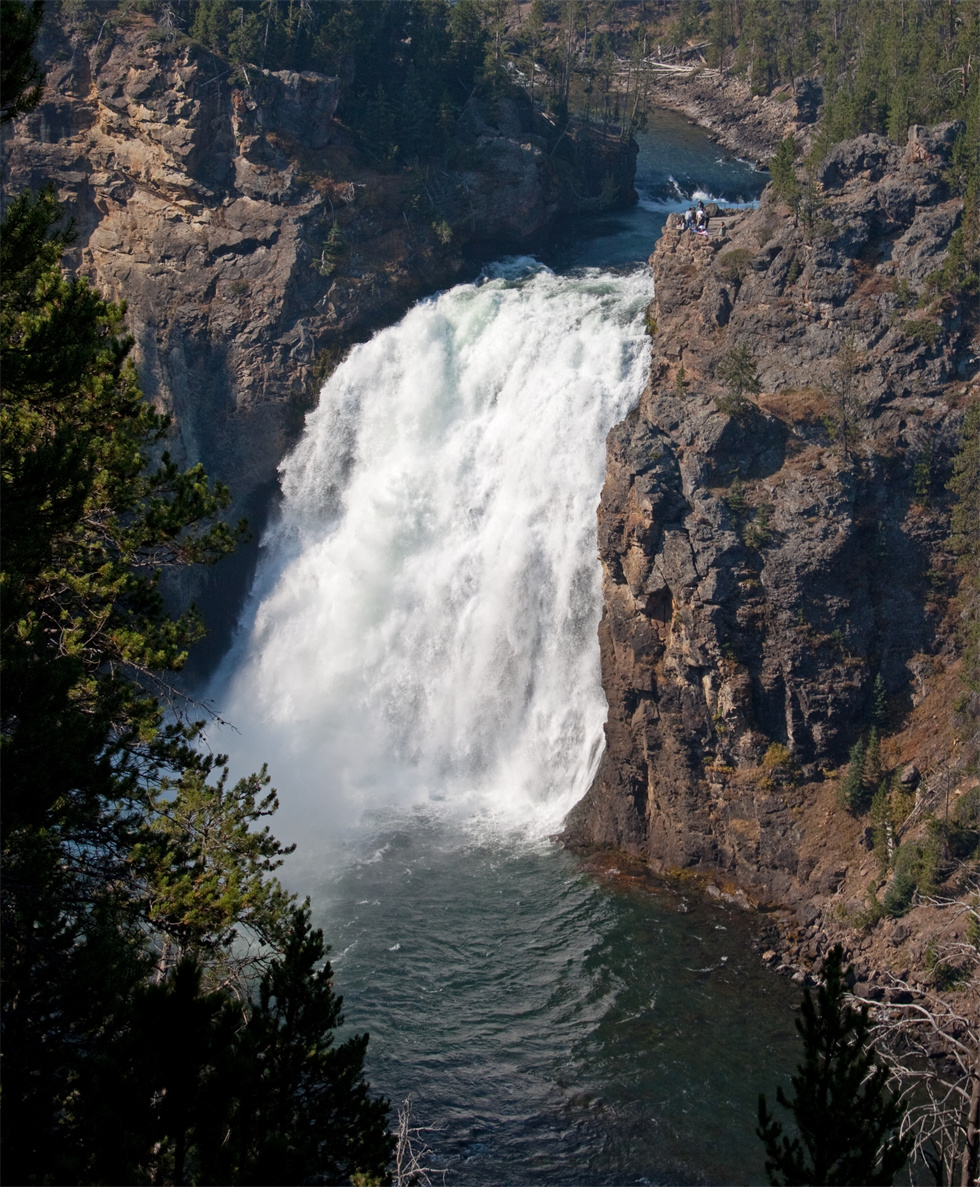
Upper Yellowstone Falls
The upper waterfall is located 400 meters upstream of the larger Yellowstone Falls. The waterfall flows vertically down the volcanic cliff with a height of 33 meters. The originally uneven volcanic rocks below the waterfall have been smoothed by hundreds of years of erosion by the waterfall.
Lower Yellowstone River Falls
The Lower Yellowstone Falls were formed by the erosion of softer rocks by the Yellowstone River. To appreciate the majesty of the Lower Falls, the observation deck is the best observation point. Artist Point is another classic viewing point of the canyon and the Lower Falls.
The highlight of the day's itinerary is the beautiful Coeur D'Alene Lake. The lake is pure blue and sparkling, so it is also known as the Blue Lake. You can also take a look at the only lake golf course in the world: most of the course is on the lakeside, and only the last hole is on a tiny island in the lake, with picturesque scenery. Then return to Seattle.
Itinerary:
Gothling Lake Cruise (optional, 60 minutes) → Pass by the world’s only lake golf course → Seattle
Coeur d’Alene
Coeur D’Alene is a lake with pure blue water and sparkling waves, so it is also known as the Blue Lake. There is a pedestrian pontoon in the lake that was conceived and built by a boatman in 1985 and is known as the longest pedestrian pontoon in the world. Walking on the pontoon, soaking up the bright sunshine and gentle breeze, watching the blue sky, clear water, lakes and mountains, watching cruise ships, speedboats and seaplanes, it is very pleasant. You can also take a look at the only lake golf course in the world: most of the course is on the lakeside, and only the last hole is on a tiny island in the lake, with picturesque scenery. You can also take a 1.5-hour sightseeing boat trip on the lake to take in the beautiful scenery.
Seat selection and payment instructions
1. Applicable seating range
"Preferred seats" usually refer to the front row area in the bus compartment (specifically based on the actual seat distribution on the bus that day). These seats enjoy a wider field of view, a more convenient boarding and alighting experience, and a relatively comfortable riding space.
2.Charging standards
(1) Itinerary of 8 days or less: USD 12/person/day
(2) Itinerary of more than 8 days: USD 15/person/day
The fee will be calculated on a daily basis based on the total number of days of the trip and will be charged once upon registration.
3. Reservation rules
(1) Voluntary choice: All tour participants can voluntarily choose whether to purchase preferred seat services when registering based on their own needs.
(2) First-come-first-served: The number of preferred seats is limited. Usually for models with 15 seats or above, the first three rows belong to the paid area. Confirmation is based on payment order, while stocks last.
(3) Priority for traveling together: If traveling companions (same order) need to book preferred seats at the same time, we will try our best to arrange adjacent seats.
4. Precautions
(1) The preferred seat fee does not include any other service content, but only the priority of seat location.
(2) If the car needs to be replaced due to weather, road conditions, vehicle scheduling, etc., we will try our best to provide a seat arrangement of equal value or refund the corresponding fee based on the actual number of days affected.
(3) For passengers who have not purchased this service, we will allocate other seats for free in rotation order, and try to ensure that the seats of traveling companions are adjacent to each other.
5.Refund policy
(1) If the order is canceled more than 7 days before the start of the trip, the preferred seat fee will be fully refunded;
(2) If canceled 3-7 days before the trip, 50% of the fee will be refunded;
(3) If canceled within 3 days before the trip, no refund will be given.
Itinerary instructions
Special instructions:
1. The above itinerary sequence, attractions, flights and accommodation locations may be temporarily changed, modified or replaced. The final itinerary is subject to the itinerary confirmed by our company before departure;
2. Our company reserves the right to change the itinerary and add price differences due to factors such as airlines, visas, governments, weather, etc.;
3. The flight numbers and times listed in the itinerary are for reference only, and reasonable adjustments will be made based on the actual situation;
Travel information
1. Gathering and boarding requirements
(1) All tour group members must gather on time and depart on time. Please arrive at the pick-up location 15 minutes in advance. Our company's tour bus will not wait. If you fail to gather and set off at the agreed time and location, or fail to join midway, you will be deemed to have given up automatically and the fee will not be refunded.
(2) The pick-up and drop-off times stated in the tour notice are all estimated times, and the specific pick-up and drop-off locations are subject to confirmation by the company. If due to traffic conditions or other special circumstances, our company's bus cannot arrive at the boarding location on time or the time is temporarily changed, our company will notify you in time, so please be patient.
2. Vehicle and luggage requirements
(1) Passenger buses are divided into three types: buses, minibuses and minibuses. Generally, buses have luggage compartments dedicated to storing luggage, while minibuses and minibuses have relatively smaller spaces for luggage storage. In view of the limited space in the luggage compartment of the bus, it is recommended not to carry too much luggage when traveling. Our company will arrange vehicles according to the final group size, ensuring one person per person.
(2) In order to avoid overcrowding in front of the scenic spots, the bus parking areas in most cities are far away from the scenic spots, and drivers are not allowed to park casually. Violators will be subject to heavy fines. If necessary, the pick-up and drop-off location may be some distance away from the attraction. Please understand.
3. Safety tips for taking a bus
(1) Smoking in the car is prohibited.
(2) Please do not bring prohibited items.
(3) Do not fiddle with anything on the car at will to avoid unnecessary damage.
(4) During the temporary stop of the bus, obey the tour guide’s arrangements and do not stay away from the group.
(5) When group members get off the bus for sightseeing, dining, or shopping, please close the windows of the tour vehicle and carry your valuables with you. The travel agency is not responsible for any loss or theft.
(6) Due to the long journey time and heavy vehicle loads, if the car breaks down and affects the itinerary, the travel agency will quickly take remedial measures and ask the group members to actively cooperate.


